
Two targets, two reasons the assay was the blocker.
Both of these are active development programmes rather than finished products. They are here because they show the two situations our platform is built for: an enzyme with no screenable readout at all, and an enzyme whose product is chemically hard to distinguish from that of its closest paralogue.
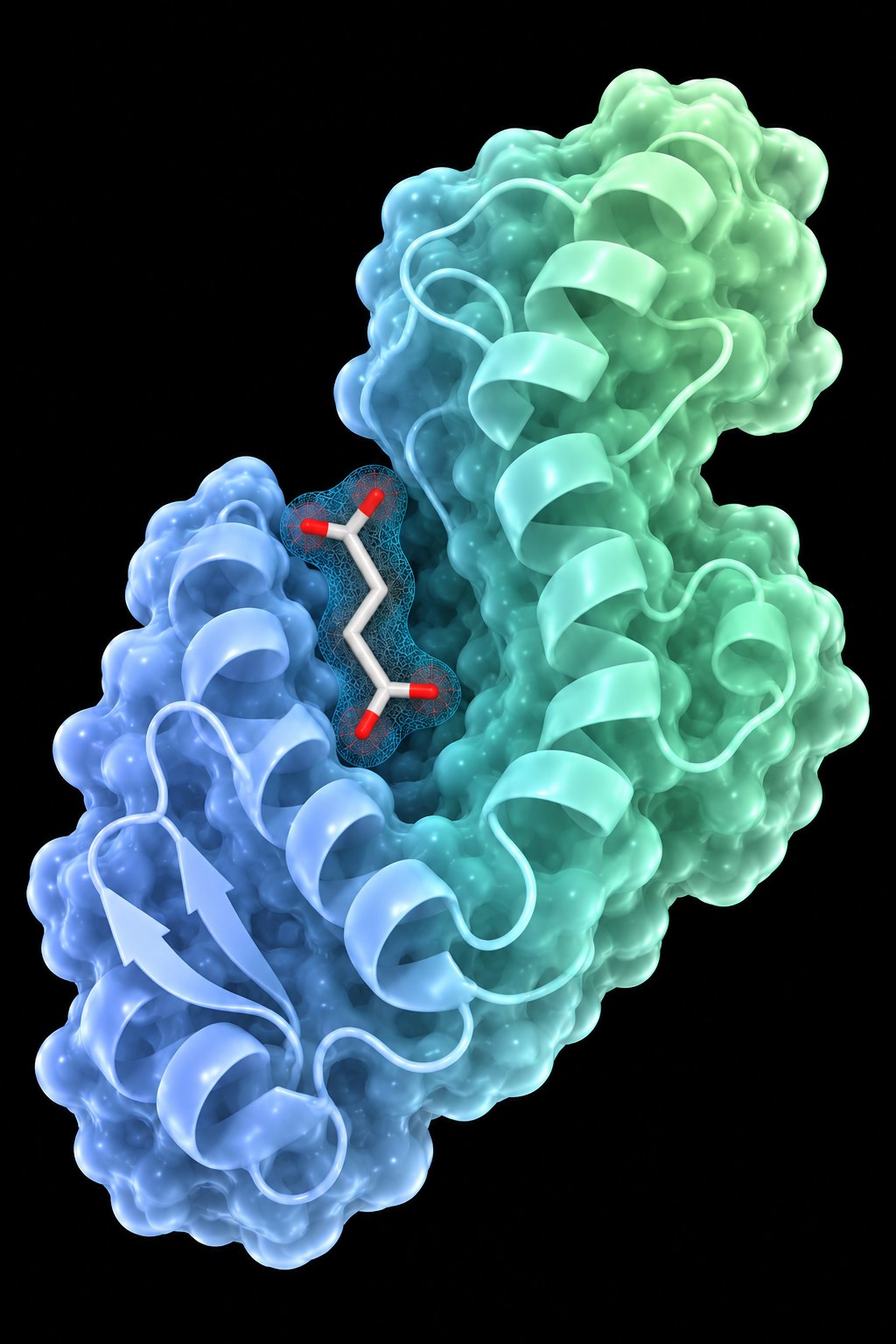
Isocitrate Lyase
Isocitrate lyase is the committed step of the glyoxylate shunt, and it is what lets Mycobacterium tuberculosis persist on fatty acids during chronic infection. It is a validated persistence target with no approved drugs against it.
It also has no HTS-compatible assay. The reaction products are small, unremarkable organic acids; the standard detection routes are coupled cascades or LC-MS, neither of which survives a large library screen intact.
No direct readout, so screening means a coupled cascade whose false-positive rate scales with library size.
A FRET sensor that binds the reaction product directly, giving a continuous rate measurement in the well.
Primary screening at plate scale with initial rates, so inhibition can be distinguished from assay interference.
Aldosterone Synthase
Aldosterone synthase catalyses the final step of aldosterone production in the adrenal cortex, and aldosterone excess drives resistant hypertension and primary aldosteronism. Baxdrostat’s approval in May 2026 made it the first inhibitor of this enzyme to reach the market after decades of attempts.
The measurement problem is selectivity. CYP11B2 differs from CYP11B1 — the enzyme that makes cortisol — by a handful of active-site residues, and their steroid products differ by a single hydroxylation. Resolving the two means LC-MS or an antibody endpoint, and neither gives a rate.
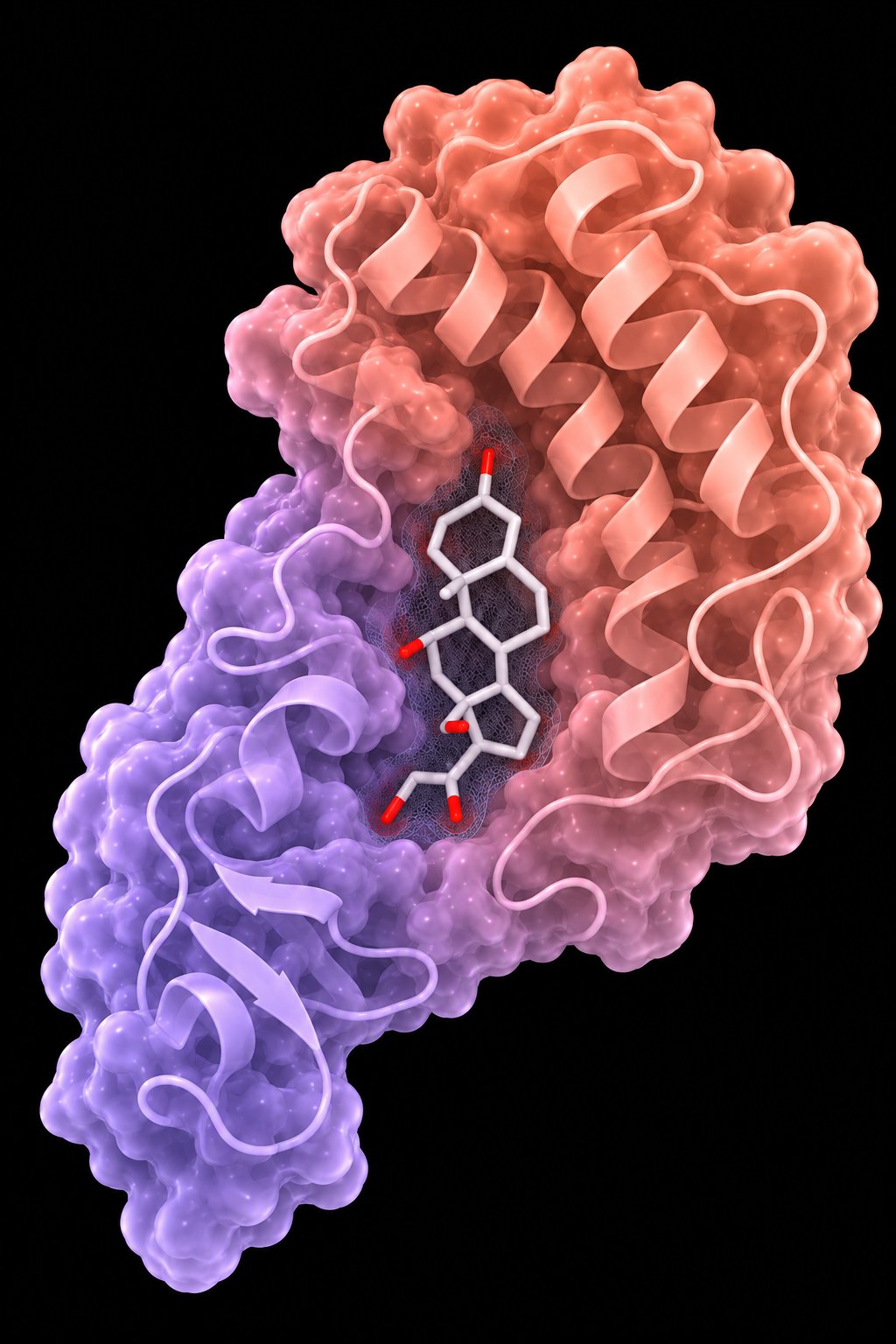
Aldosterone and cortisol are one hydroxylation apart, so a useful screen has to resolve two nearly identical steroids.
A binding protein selected against the aldosterone scaffold specifically, counter-screened on the CYP11B1 product.
Selectivity data and initial rates from the same well, instead of one LC-MS run per data point.
Where does your assay break down?
Some targets have no direct readout. Others have one that can't distinguish the product from its substrate or a close relative. Tell us which and we'll tell you whether a sensor solves it.