
Kynurenic Acid Assay Kit
Direct detection of kynurenic acid in a homogeneous well — without chromatography and without a coupled enzyme cascade.
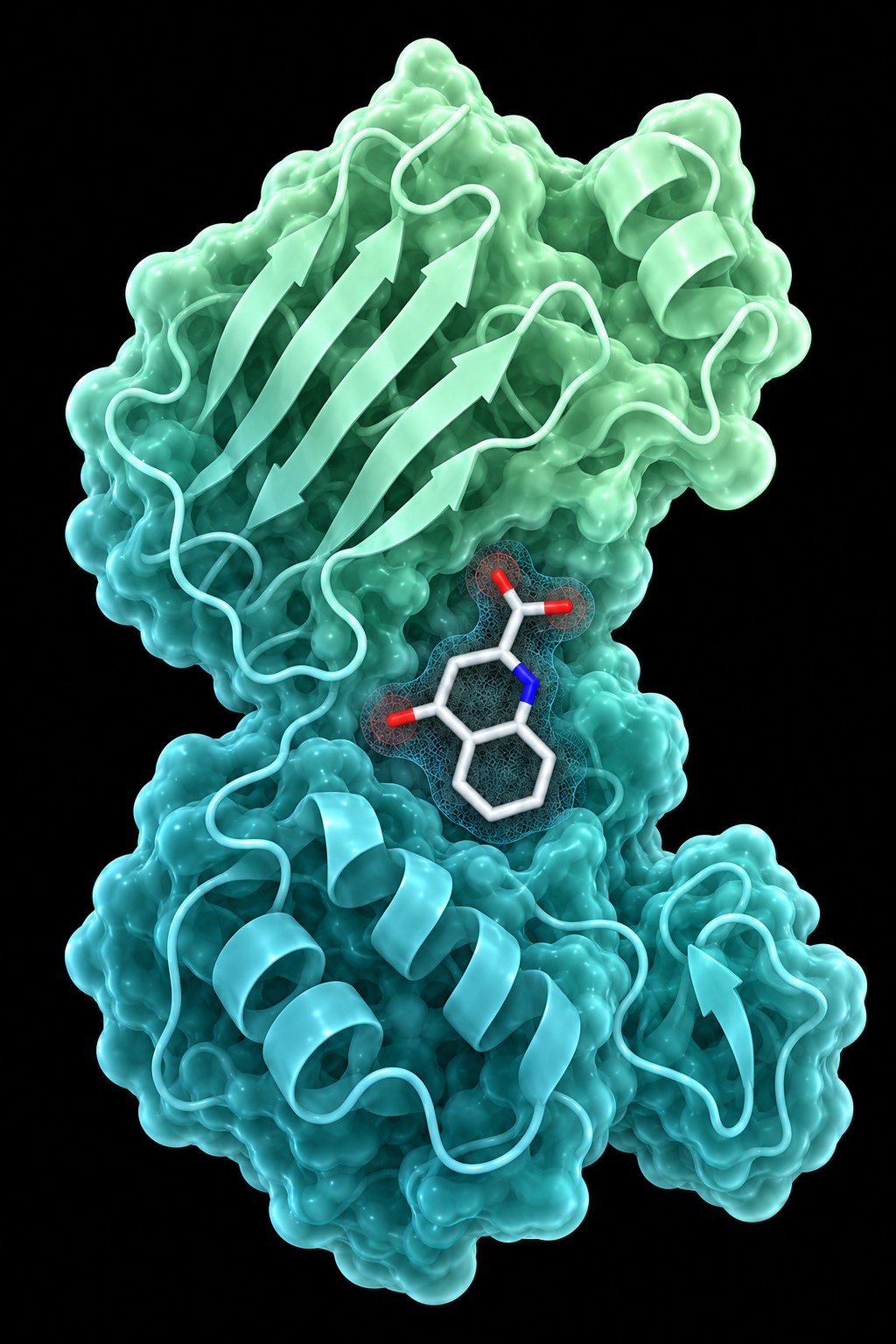
The branch of the kynurenine pathway that acts on the brain.
Kynurenine aminotransferase II transaminates L-kynurenine to kynurenic acid, an endogenous antagonist at the NMDA receptor glycine site and at α7 nicotinic receptors. Raised kynurenic acid in CSF is one of the more reproducible biochemical findings in schizophrenia, and lowering it is the rationale behind the KAT II inhibitors now in clinical development.
Measuring the product normally means chromatography with fluorescence detection or LC-MS. Our sensor binds kynurenic acid directly, so the read is the measurement rather than an inference from one.
KAT II inhibitor screening
Initial rates rather than endpoints, in 96- and 384-well plate format.
Kynurenine pathway flux
Follow the transaminase branch of the pathway across treatments without extraction chemistry.
Chromatography triage
Read plates directly and reserve the LC-MS run for confirmation rather than discovery.
Request information for the Kynurenic Acid Assay Kit
Contact us for availability, pricing and early access. Our team is happy to provide technical details and help you select the right configuration for your work.